Wednesday, 22 May 2013

Hachiko Statue

Located at Shibuya, Tokyo, the statue of Hachiko won't be hard to find. It's located just in front of Shibuya train station and near to the famous Shibuya crossing.


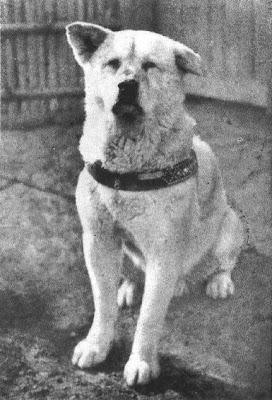
The story is back in 1924, a Professor of  The University of Tokyo, Hidesaburo Ueno,  adopted an abandoned dog, which he named Hachiko. The dog was a Akita breed. Hachiko used to greet the Professor  everyday whenever he come back from work at the same time at the Shibuya Railway Station. Hachiko and the Professor followed this routine everytime until May 1925, when the Professor died and never returned home. But Hachiko waited there for the Professor to return home for the next 10 years (some say 9 years)  :-(


Other commuters and shops owners nearby who had seen the bond of the dog with the Professor felt sorry for it and started feeding it at the station. Hachiko finally died on March 8, 1935. His remains have been preserved at the National Science Museum of Japan, Tokyo. 

Today the Japanese people would refer to Hachiko to inspire their children. And in honour of Hachiko, his statue was made at where he waited for the Professor to return home. 

Images below from Wikipedia:


Friday, 10 May 2013

Tokyo, The Big Orange

You that New York city is called "The Big Apple", but did you know Tokyo city is called "The Big Orange"? 
From an unverified source: Tokyo city is called "The Big Orange" or also called "The Big Mikan" because of the web like pattern streets (like the one you can find covering the orange pulps), sometimes with no name or numbers. Sometimes a single route will eventually becomes two route out of nowhere. When people ask for direction on the streets, the answer you will get are usually the name of  shops or places close to the direction. So do you know why Tokyo City is called "The Big Orange"? Please share with us at our facebook page :-)


Wednesday, 13 March 2013

Japan Festival 2013 in Brunei

Another exhibition for you to visit if you are in Brunei Darussalam. Again, Even if you are not any of those three mentioned, this exhibition is worth your time to visit and learn something about Japan. The details of the exhibition can be found in the poster.


Friday, 8 February 2013

The Spirit of Budo at The Brunei Museum, 2013

If you are in Brunei Darussalam, and you are a Japan History, Culture or Martial Arts lover. This is something for you to go and visit. Even if you are not any of those three mentioned, this exhibition is worth your time to visit and learn something about Japan. The details of the exhibition can be found in the poster.


Tuesday, 8 January 2013

Japanese Soba Noodles

Soba noodles (buckwheat noodles) are available everywhere in Japan. It is eaten either steeped in a hot broth with various ingredients or cold with a soy-based dipping sauce. Soba noodles are very popular and inexpensive in Japan, especially during summer season. 


Unlike pasta or other type of noodles around the world, most Japanese noodles, including soba, are rinsed in cold running water. This not only cools them down but gets rid of excess starch, which adversely affects the flavor of the noodles. 


The most popular Soba noodles is serve cold. You eat Soba noodles by dipping into a properly made sauce or Soba Tsuyu, with plenty of spicy condiments or Yakumi. The Tsuyu is made of a strong mixture of Dashi, sweetened soy sauce (also called "Satōjōyu") and Mirin. Wasabi and Spring onions, and sometime raw Quail egg are often mixed into the Tsuyu. 

It is typically eaten with chopsticks, you picks up a small amount of Soba noodles from the tray and swirls it in the cold Tsuyu before eating it. and in Japan, it is considered acceptable to slurp the noodles noisily. This is especially common with hot noodles, as drawing up the noodles quickly into the mouth helps cool them. 


On New Year's Eve there is a custom to eat "Toshikoshi-soba” (Year-crossing noodles). Because soba is fine and long, people eat them to wish for a long life. Another interesting fact about Soba is it also means "Next to". There is a Japanese custom called "Hikkoshi-soba” (Moving-in noodles). People, who have just moved into a new neighbourhood, give their new neighbours Soba noodles while introducing themselves.


Soba Noodles differ in different part of Japan and shops. There are different types of Soba noodles and it is serve with different kind of ingredients. You have to try it out yourself to know which Soba noodles you would prefer to eat. Next time you are in Japan or any Japanese restaurants, give it a try, but if you are already a Soba noodles lover, then Enjoy :-)


Sunday, 25 November 2012

Article from Japan

This article is from Japan Ministry of Foreign Affairs website about a Brunei Primary School at Kampung Ayer (Water Village). It's in Japanese, so if you know how to read Japanese then have a look, if not get it translated. Click the link below to view.


Friday, 23 November 2012


If you are visiting Kyoto, Japan then Kinkaku-Ji (temple) is a wonderful place to visit and a must visit. Kinkaku-Ji or the Golden Pavilion is a Zen Buddhist temple in northern Kyoto whose top two floors are completely covered in gold leaf. It is formally known as Rokuon-Ji and was the retirement villa of the shogun Ashikaga Yoshimitsu. Kinkaku-Ji is an impressive structure built overlooking a large pond, and is the only building left of Yoshimitsu's former retirement complex. It has burned down numerous times throughout its history including twice during the Onin War which destroyed much of Kyoto, and burned down once again more recently in 1950 when it was set on fire by a monk. The present structure was rebuilt in 1955.